IArrival
In this chapter
- 1vArrival, the upper rib
- 2vKarrowin Halt
- 3rVarangurd Anchorage
- 3vKelp-fanwing
- 4rKelp-tax dinner
- 5rHelmsward Crossing
- 5vPhosphor on the lower rib
- 6vPhosphor-kelp
2185-09-02 · 95 m
Arrival, the upper rib
A retrospective of the first descent at Varangurd Anchorage — the moonpool, the trimix, the kelp, and the long night in a cylinder alongside someone who had forgotten how long a year was.
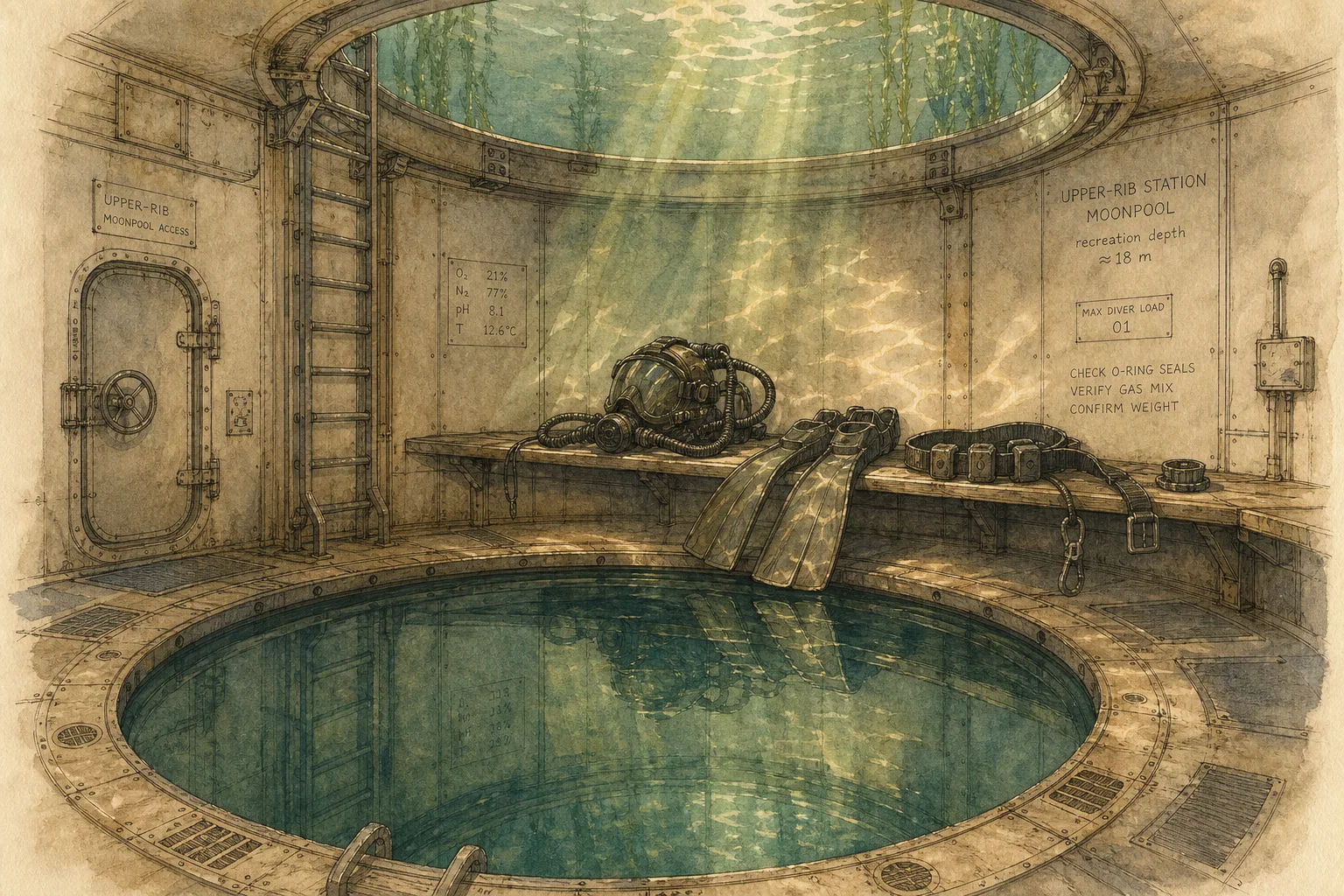
This is the entry I keep returning to. I have rewritten it three times and each time the trimix tastes like nothing, which is the point. What follows is the version I have stopped revising — not because it is finished, but because revising it further begins to feel like dishonesty in the other direction.
I remember the light through the moonpool more clearly than almost anything else from that period. It was early September and the surface was overcast, but even so the column of refracted water above the entry tube carried a quality of day that felt, from below, like a closing argument. You could watch it fade on the way down. By forty metres it was conjecture.
I had been briefed at Karrowin Halt three days before — medical, gear check, trimix ratios — and I had been told by everyone with a kind face that the first descent was the hardest, and by everyone with a professional face that it was not. Both were right in ways that did not overlap.
The trimix tasted like nothing, which is the point. I had been warned it would taste like nothing, and I had not believed this, and then it did. You breathe a gas that has no identity and discover that breathing has always been partially a sensory pleasure you were not accounting for. The regulator clicked. The depth gauge moved.
The trimix tasted like nothing, which is the point.
At sixty metres the kelp-fanwing were the first thing that felt real. They lived in a seam between two shelf formations off the rib's underside — a cluster of six or eight, wings furled in the current, translucent at the edges. I held position and watched. The dive guide, a woman whose name I have since lost and whose face I remember as a mask above a drysuit collar, did not point. She had already seen them ten thousand times. She waited with the courtesy of someone who knows the ceremony belongs to the observer.
At ninety-five metres we stopped. The limit of my certification. The bottom of the rib, visible below us, continued without interest in our ceiling.
Back on the platform, the decompression ceiling felt punitive in the way bureaucracy feels punitive — not wrong, just indifferent. I hung in the water column at six metres for longer than I wanted to. A rope. A gauge. The sound of my own exhales.
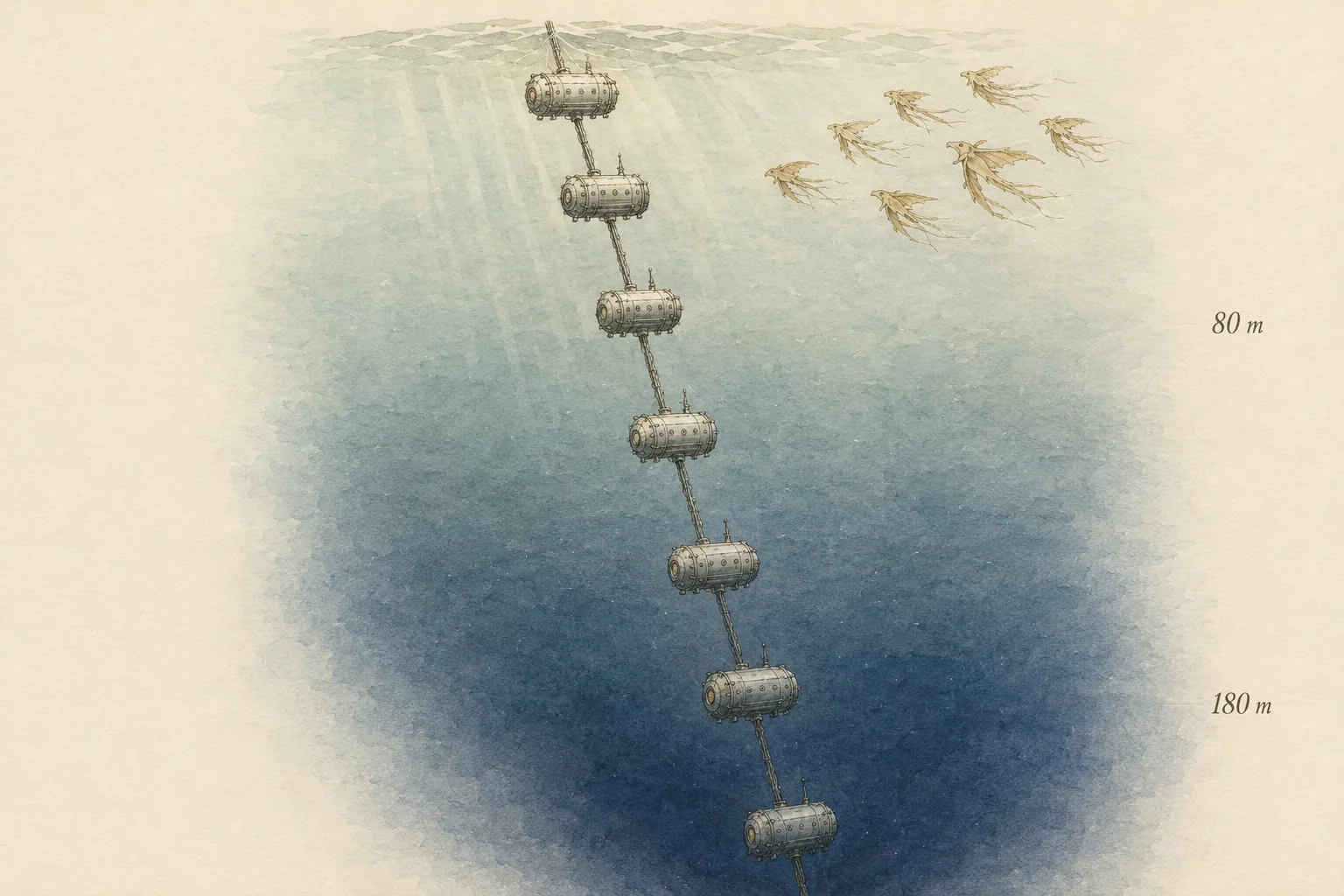
The first night in the saturation cylinder at Varangurd Anchorage was the real arrival. Small, pressurised, smelling of recycled air and whatever the previous occupant had eaten. I had a bunk and a sealed porthole and the ambient thrum of whatever machinery kept everything outside from entering. My rotation partner was a man nine years into contract who had stopped making jokes about the surface weather and had not yet found another topic. He showed me the locker system, the cleaning rotation, the small social geography of confined quarters, all with the cheerful precision of someone performing a task they can no longer see.
"You'll stop thinking about it in about a month," he said, meaning the pressure, the confinement, the cylinder. "Then you'll start thinking about something else."
He was right. I did not ask what.
M. Vael, writing from Varangurd, late in the first rotation.
I copied this entry forward into the second-rotation ledger and then again into the third, with no edits, which is the closest I have come to admitting it is the chapter the rest of these begin from.